If it be the pleasure of Heaven that my country shall require the poor offering of my life, the victim shall be ready. But while I do live, let me have a country, or at least the hope of a country — and that a free country. But whatever may be our fate, be assured … this declaration will stand. It may cost treasure, and it may cost blood; but it will stand, and it will richly compensate for both … And live or die, survive or perish, I am for the declaration. It is my living sentiment, and, by the blessing of God, it shall be my dying sentiment: independence now, and independence forever! — Attributed to John Adams, Signing the Declaration of Independence
Independence! What a wonderful word! Everyone — from your teenager who wants his own car to your senior-citizen parents who want to remain in their own home values his or her independence. The same is true of a people. Over the past century, dozens of former colonies of Great Britain, France, and other colonial powers secured their places among the nominally independent nations of the world. Unfortunately, in most cases, their national collective experiences in pursuit of happiness were not always … happy. Contrast that with the United States. For all our trials during our 225-year-long history, we still have a fair degree of freedom to pursue happiness as men and women of conscience and good will. We have a greater combination of political freedom, economic prosperity, and generosity of national spirit than has been enjoyed by any major civilization in recorded history. Reflect, for a moment, on the immense price that was paid to win our independence, before our Founders could establish the republican form of government that secures our freedom. You are no doubt very familiar with the suffering and hardship experienced by those who fought our War of Independence. For example, you’ve heard or read about the soldiers at Valley Forge who lived on flour-and-water pancakes for weeks and who, lacking shoes, wrapped their frost-bitten feet in strips of blanket, leaving blood-stained footprints in the snow. Less known are the stories of what became of those who actually signed the Declaration of Independence. You will recall that the signers pledged to each other their lives, fortunes, and sacred honor. And some were called upon to fulfill that pledge. The signers from New York, which was occupied by the British, suffered disproportionately. The wife of Francis Lewis was imprisoned and treated brutally, shortening her life. When Lewis returned to his estate after the war, he found most of it damaged or destroyed. The estates of William Floyd and Lewis Morris were ransacked and severely damaged. And Philip Livingston, an importer/exporter of British goods, signed himself out of business. Most of his property was confiscated by the British and he sold much of what remained to help fund his new nation. Thomas Nelson, Jr. of Virginia suffered a similar fate. “Let my trade perish,” he told those assembled at the House of Burgesses. “I call God to witness that if any British troops are landed in the County of York, of which I am Lieutenant, I will wait no orders, but will summon the militia and drive the invaders into the sea!” At the battle of Yorktown, when the English were headquartered in Nelson’s house, his gunners avoided his home. “Why do you spare my house?” he asked a gunner. “Out of respect to you, Sir,” came the reply. Nelson directed the cannon fire upon his own house, heavily damaging it. Of the 56 men who signed the Declaration, nine died of injuries incurred during the war; five were imprisoned; the homes of 12 signers were burned to the ground; 17 lost virtually everything they owned; and the families of many were killed, jailed, and/or left destitute. In addition, members of the military suffered an estimated 33,769 casualties during the war, including 6,824 battle deaths. The sacrifice involved in securing the freedom that resulted from American independence is difficult to fully comprehend.
Squandering Our Inheritance
As a JBS member, you are no doubt familiar with the many ways our leaders have compromised American independence in recent decades. One would be tempted to conclude that the last few generations of Americans, softened by prosperity and ignorant of history, no longer care about defending their nation’s sovereignty. However, that conclusion would be both premature and unfair. If sacrifice during wartime is any barometer of dedication to our national survival, we live among the greatest concentration of patriots in our history. Over 16 million Americans served in World War II, nearly six million in Korea, and nearly nine million in Vietnam. Casualties in those three wars totaled nearly one and one-half million. And millions of civilians sacrificed on the home front. There clearly has been no shortage of Americans dedicated to duty. But what our soldiers have protected on the battlefields, our politicians and diplomats have thrown away in the halls of Congress, in the White House, in embassies, and at the United Nations. But as disgraceful as our “surrender by diplomacy” has been, an even worse threat to our sovereignty looms on the horizon.
Regional Government, European Style
Starting in 1951, with the European Coal and Steel Community (ECSC), the merger of Europe into a single political entity has progressed steadily. The 1957 Treaty of Rome set up the European Economic Community (EEC), also known as the Common Market, and the European Atomic Community (EURATOM). In 1967, the ECSC, the EEC, and EURATOM merged to form the European Community (EC). A major transition to continental government occurred in December 1991, when EC member nations met at Maastricht, the Netherlands, to sign treaties on monetary and political union. The treaties:
Provided for a common currency. (The Euro will replace the currencies of EU members on January 1st.)
Sought to establish a common foreign policy.
Laid the foundation for a common defense policy.
Expanded the areas in which the European Community would have authority.
Gave the organization a major role in dictating social policy for the member states.
Increased the powers of the European Parliament. The Maastricht treaties went into effect in 1993; the EC became known as the European Union in 1994.
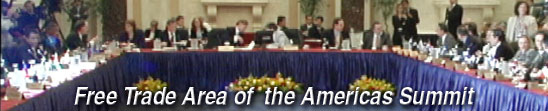
But what does the development of the European Union have to do with U.S. independence? The answer lies in the similar movement to establish so-called “free trade” blocs in our own hemisphere. Most Europeans who came together in 1951 to stabilize the prices of coal and steel probably never dreamed that they were starting on a road that would eventually lead to political union and the erosion of their national sovereignty. That is, the majority of Europeans never dreamed of such a development. Europe’s own Insiders certainly foresaw where such attacks on state sovereignty would lead. Our own independence has been compromised by participation in the North American Free Trade Agreement (NAFTA) and the General Agreement on Tariffs and Trade (GATT, since replaced by the WTO). In an article written in support of NAFTA, published in the Los Angeles Times of July 18, 1993, consummate Insider Henry Kissinger said of the trade agreement: “It will represent the most creative step toward a new world order taken by any group of countries since the end of the Cold War, and the first step toward an even larger vision of a free-trade zone for the entire Western Hemisphere.” The Free Trade Area of the Americas (FTAA) proposed at the April Summit of the Americas in Quebec City, could well prove to be another giant step — the “Maastricht Treaties” of the Western Hemisphere. As William Norman Grigg wrote in the May Bulletin: “Make no mistake about it: The proposed FTAA, like NAFTA, GATT, and the European Union, would be another multinational building bloc of a UN-dominated world order disguised as a ‘free trade’ arrangement.” As was the case with NATO (a “regional arrangement or agency” of the United Nations), regional trading blocs are deceptive constructions used to erode national sovereignty, step-by-step. The international Insiders, like all con men, offer some temporary benefit as an enticement for nations to surrender their national authority. In the case of the EU, the poorer nations of Europe were lured with infrastructure loans. But sooner or later, nations learn that piecemeal surrender of sovereignty is difficult to reverse. Some organizations (the Mafia comes to mind) do not allow their members to resign. We must not allow the European Union to be used as a template for establishing a similar regional political union in our own hemisphere. The architects of world order intend for the merger to proceed much more quickly than it did in Europe, with full implementation of the FTAA planned to begin in 2005. It is time to stop such regionalization in its tracks. If you have not yet read Mr. Grigg’s Foreword, “The ‘Free Trade’ Road to Tyranny,” in the May Bulletin, we recommend that you do so. We also highly recommend William F. Jasper’s article, “Pincer Strategy Behind the FTAA” in The New American of May 21st. His new book, The United Nations Exposed, devotes an entire chapter to this subject, adding to the value of this powerful educational tool. (See the article on the next page and the order form in the centerspread.)
Surrendering Our Legacy
You have probably read about Woodrow Wilson’s obsession with entangling the United States in the League of Nations, only to be thwarted by a patriotic Senate. You probably also recall that, following that legislative defeat, Wilson’s alter ego, Edward Mandell House, was an influential figure in founding the Council on Foreign Relations. And that House’s successors in the CFR (including his disciple, John Foster Dulles) were largely responsible for establishing the United Nations in 1945. Since the creation of the United Nations, NATO, and similar entangling alliances following World War II, the greatest threat to national sovereignty comes not from foreign invaders, but domestic scoundrels with a “world view.” To appreciate the threat to our independence posed by the impending hemispheric “free-trade” zones, we need only glance eastward, to Europe. Is a Western Hemisphere equivalent of the European Union what we want for America? And is a world union under the United Nations — which most certainly would follow — our answer to the sacrifices of those who pledged their lives, their fortunes, and their sacred honor? Independence Day, July 4th, is our nation’s birthday. Fittingly, we celebrate it with parades, family gatherings, and fireworks. If we may personify our beloved nation for a moment, we might picture the birthday celebration of a beloved family member, wishing her good health, and a long life. Keeping America healthy is the responsibility of every American. Her birth is a celebration of her independence, and her continued good health requires a defense of that independence, without compromise.